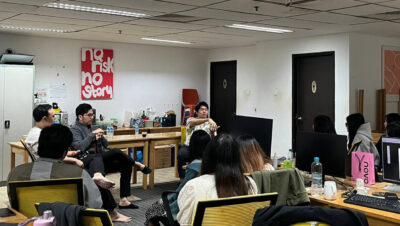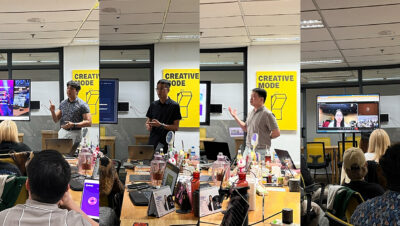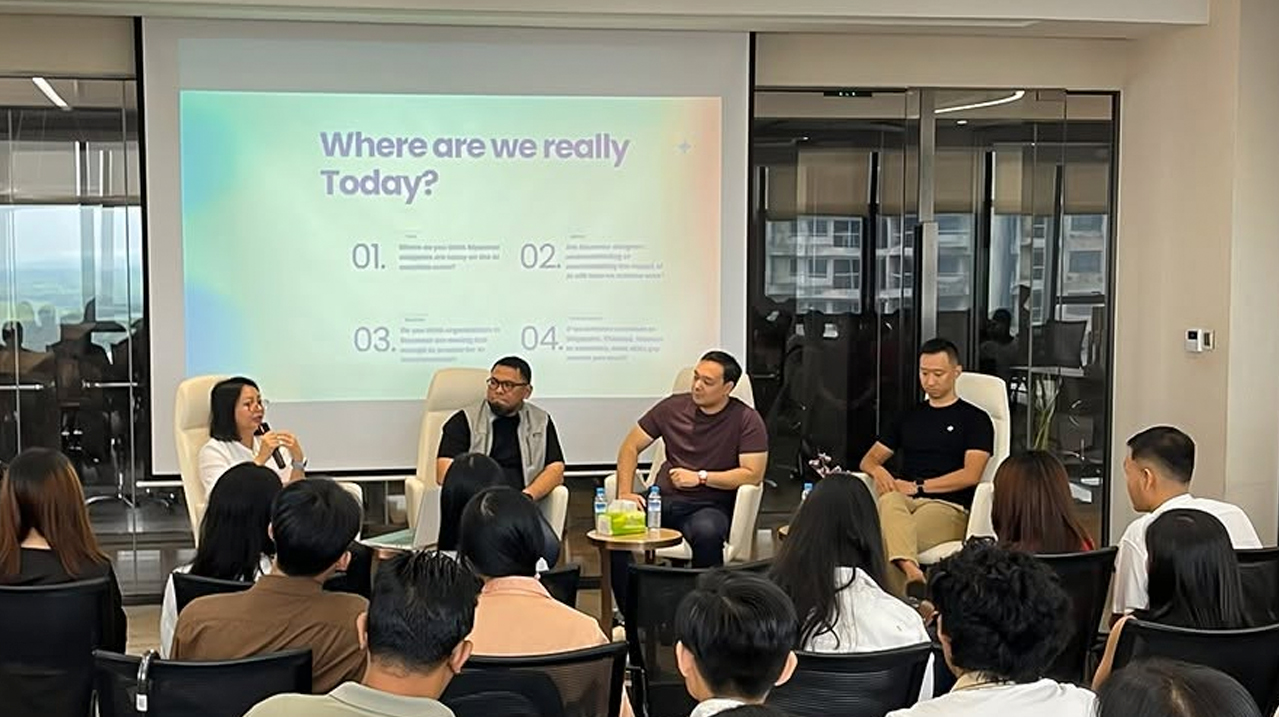
Our CEO, Pyit Sone Oo, recently joined the panel at Cursor for Designers Yangon for a conversation around AI, creativity, design and the future of the creative industry.
He was joined by Brandon, LOM Tech Global & Cursor MM Ambassador; Hendra Saputra, CMO of U9; and Wai Yi Mon Soe, Founder of UXMM & BridgeX, bringing together perspectives from technology, design, business and the wider creative community.
At a time when AI is changing how we design, create and work at an unprecedented pace, conversations like these are becoming increasingly important—especially for young designers and creatives beginning their careers.
AI Is Changing How We Create
The creative industry is already experiencing a fundamental shift.
Designers can generate concepts in seconds. Developers can build prototypes faster. Creative teams can explore more directions with fewer resources. Tasks that previously required hours can increasingly be completed in minutes with the support of AI.
The question is no longer whether creatives should use AI.
The bigger question is: what remains uniquely human when AI becomes part of almost every creative process?
For Pyit Sone Oo, the answer comes back to the way we think.
AI-First World. Human-First Creativity.
During the discussion, Pyit Sone Oo shared a perspective that we strongly believe in at BEYOND 360:
Even in an AI-first world, creativity should remain human-first.
AI can help us work faster.
It can help us explore more ideas, remove repetitive work and push the boundaries of what a designer or creative team can produce.
But speed and output alone do not make something creative.
The thinking behind an idea still matters.
Judgment still matters.
Empathy still matters.
Cultural understanding still matters.
And most importantly, purpose still matters.
These are the things that allow us to understand not simply what we can create, but why we should create it in the first place.
The Value of Designers Is Changing
As AI tools become more capable, the role of designers will inevitably evolve.
Being technically skilled with design software will remain useful, but knowing how to operate a tool will become less of a differentiator when technology can increasingly execute on our behalf.
The greater advantage will come from knowing what questions to ask, which ideas are worth pursuing, what feels right for the audience and why one creative direction is stronger than another.
In other words, AI may increasingly help with execution, but humans still need to provide direction.
For young designers entering the industry, this means learning AI is important—but developing critical thinking, curiosity, empathy, taste and an understanding of people is equally important.
Don’t Compete With AI. Learn to Create With It.
The future of creativity does not need to be framed as humans versus AI.
It can be humans with AI.
The opportunity is to use technology to expand our capabilities without allowing it to replace the thinking that makes creative work meaningful.
A designer who understands people and knows how to work effectively with AI may be able to explore more possibilities than ever before.
A creative who understands culture, strategy and human behaviour can use AI to turn ideas into reality faster.
Technology changes the possibilities.
People still decide what is worth creating.
Creating Space for the Creative Community
A big thank you to the Cursor Myanmar and UXMM teams for bringing the community together and creating a space where designers, technologists and industry leaders could learn, share perspectives and discuss where the industry is heading.
As AI continues to reshape creative work, we believe these conversations will become even more important.
Because the future of creativity will undoubtedly involve AI.
But the future should still be shaped by people.
AI-first world. Human-first creativity.